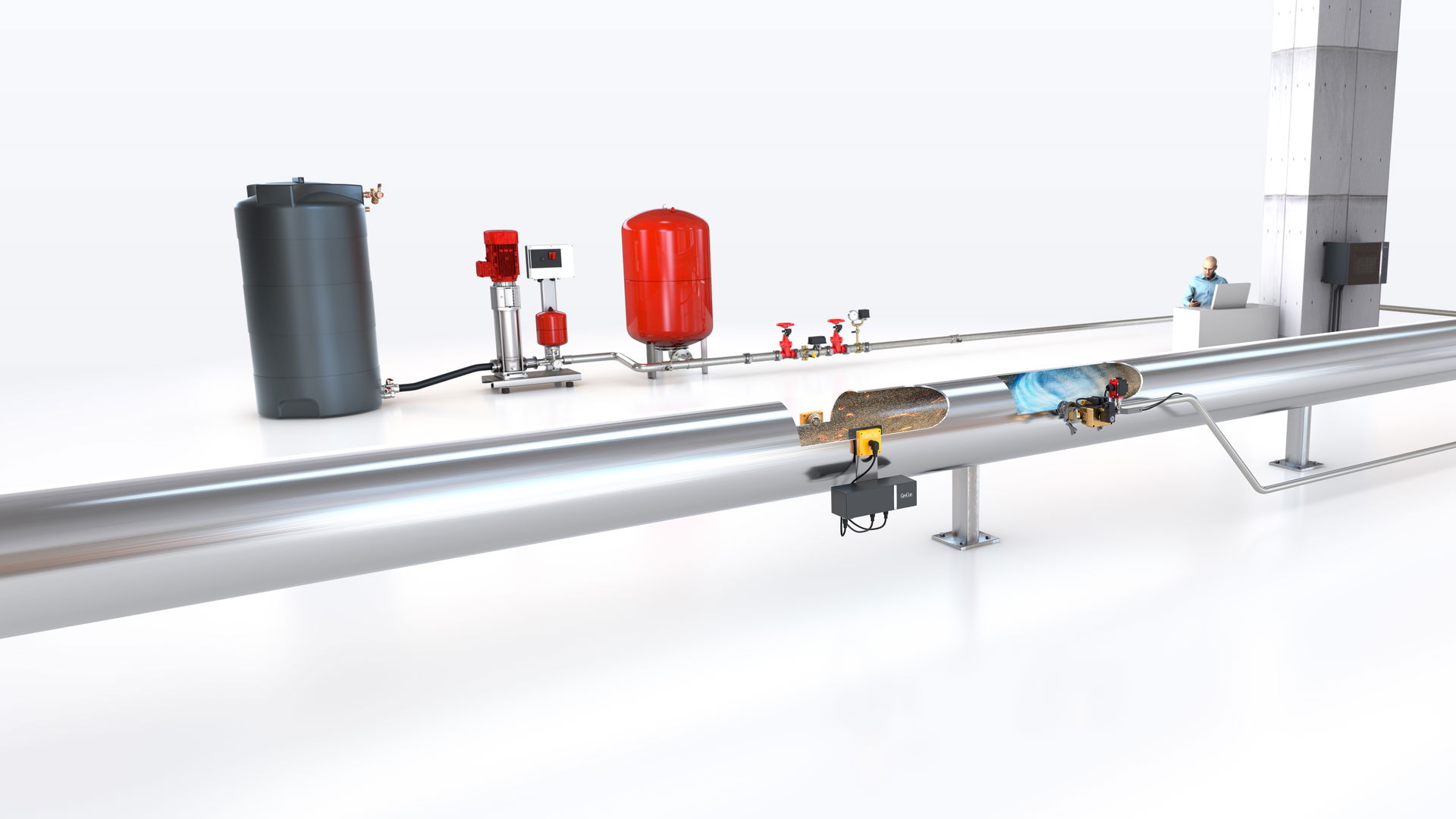
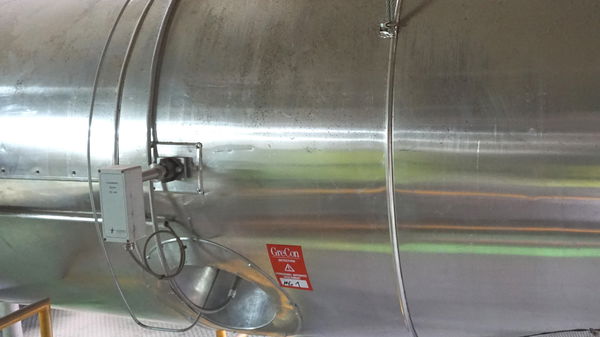
[Translate to English US:] Pipe system in an industrial hall

Fire protection for piping—extinguishing sparks and tackling pipe fires

Eliminate ignition sources. Extinguish burning deposits in a targeted way.

Industrial piping carries exhaust air, dust, and other process materials. Along the way, sparks and hot particles can enter downstream equipment and trigger fires there. Another hazard arises within the piping itself: flammable deposits on the inner walls can ignite and keep burning unnoticed over long distances.

With GreCon PROTECTOR PIPE, we help protect against both hazards. Our intelligent fire protection system detects and extinguishes ignition sources in the air or material flow and also enables targeted fire suppression within the piping. This helps protect piping and connected systems from fire damage and prevent unplanned production downtime.

  • Detect sparks and hot particles early and extinguish them automatically
  • Targeted suppression of burning deposits within the piping
  • Help protect piping and downstream equipment from fire damage

Risks and challenges

Pipe fires—an often underestimated hazard

Piping connects production areas and carries exhaust air, dust, or other materials. Sparks and smoldering particles can also travel with the air or material flow. At the same time, in many processes flammable residues accumulate on the inner walls of the pipes.

Exhaust ducts from thermal and mechanical production processes are particularly at risk. Oils, greases, waxes, tar, or plastic residues can build up there into significant fire loads. If they ignite, a fire can spread inside the piping long before it becomes visible from the outside.

Fires that are hard to detect and costly

Pipe fires often go undetected for a long time. The first visible signs may include smoke escaping from flange joints or discoloration of the piping. By then, seals and pipe walls may already be damaged.

Because the source of the fire is inside enclosed and often hard-to-access ducts, extinguishing it from the outside is particularly difficult.

Flammable deposits on the inside walls of the pipes

During operation, flammable substances from the process can accumulate on the inside walls of the piping. If these deposits ignite, they can create pockets of embers or smoldering fires that may spread along the piping.

Sparks and hot particles in the material flow

Mechanical processing, friction, or high process temperatures can generate sparks and embers. These are carried through the piping into downstream filters, silos, or other areas of the plant, where they can ignite flammable materials.

GreCon PROTECTOR PIPE: Two hazards. One tailored protection concept.

Protecting industrial piping effectively means taking two different fire hazards into account: sparks traveling through the piping and fires that start directly on the inner walls of the pipes.

GreCon PROTECTOR PIPE combines automatic spark suppression and targeted pipe fire extinguishing in a modular fire protection system. Both protective functions complement each other and can be tailored to the specific process conditions.

Spark extinguishing principle

Spark suppression—stopping ignition sources before they cause damage

Sparks and hot particles can be carried over long distances in the air or material flow. If they come into contact with flammable materials in downstream systems—such as filters or conveyor systems—there is a risk of fire and production downtime.

GreCon PROTECTOR detects these ignition sources directly within the piping. The spark detectors detect passing sparks and embers and automatically trigger the corresponding extinguishing system.

The extinguishing agent is introduced precisely into the air or material flow to extinguish detected ignition sources before they reach at-risk areas of the plant.

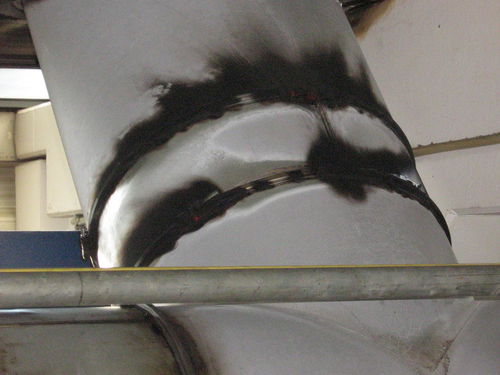
Soot on the outside of a large pipe
Soot on the outer wall is often the first visible sign of a pipe fire. The actual source of the fire lies inside the duct and is virtually inaccessible from the outside.

Pipe fire extinguishing—tackling burning deposits directly

If deposits on the inside walls of the pipe ignite, a different hazard arises. The source of the fire is now inside the piping. Conventional spark suppression can extinguish sparks carried along with the flow, but it does not necessarily reach the burning deposits themselves.

This is where pipe fire extinguishing comes into play.

GreCon PROTECTOR PIPE can recognize increased or sustained spark activity as a sign of a pipe fire and activate additional extinguishing measures. The extinguishing agent is injected directly into the affected sections of the piping through appropriately positioned extinguishing nozzles.

This allows burning deposits and pockets of embers to be targeted and extinguished before the fire spreads further.

How the PROTECTOR components work together

Detect ignition sources and signs of pipe fires early

SCOUT detectors monitor the air or material flow for sparks and hot particles.

While individual ignition events trigger automatic spark suppression, increased or continuous spark activity may indicate burning deposits inside the piping.

Process signals. Control protective measures locally.

GreCon MISSION CONTROL consolidates the information from the connected detectors, monitors the fire protection system, and coordinates the specified protective measures.

The GreCon RANGER handles decentralized signal processing near the detection and extinguishing components. It processes signals on-site and triggers the necessary responses within milliseconds. This shortens signal paths and reduces the amount of cabling required.

Together, MISSION CONTROL and RANGER enable a graduated response to individual ignition events and to signs of a pipe fire.

Extinguish sparks. Target pipe fires.

HUNTER suppression components respond automatically to detected hazards.

Individual sparks are extinguished in the air or material flow. If there are signs of a pipe fire, additional suppression zones can be activated to tackle burning deposits inside the piping.

In this way, spark suppression and pipe fire extinguishing work hand in hand within a coordinated fire protection strategy.

GreCon PROTECTOR system components
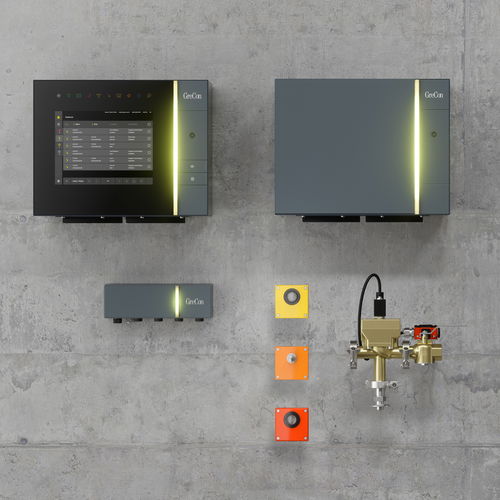
Detect, process, respond: SCOUT, MISSION CONTROL, RANGER, and HUNTER work together as a coordinated system.

Custom piping protection, planned to fit

Every piping system has its own fire protection requirements. With GreCon PROTECTOR PIPE, we combine the appropriate detection, control, and suppression components into a custom protection system—for both new and existing installations.

1

Analyzing risks

We review materials, possible ignition sources, and combustible deposits, taking into account the piping layout, airflows, and connected areas of the plant.

2

Combining protective measures

We tailor spark detection, automatic spark suppression, and targeted pipe fire extinguishing to your system. Even larger piping systems can be divided into individual protection areas.

3

Integrating and supporting

We integrate GreCon PROTECTOR into your plant and expand the system as needed. Regular service and maintenance help keep it ready for operation over the long term.

Experience you can rely on

For over 50 years, we have been developing solutions for preventive industrial fire protection. Our systems help protect production lines across a wide range of industries and under demanding operating conditions.

This expertise goes into every new protection concept. With GreCon PROTECTOR, we combine proven technologies for spark detection and suppression with intelligent control functions and targeted measures for fighting pipe fires.

Milliseconds
from spark detection to extinguishing
50+
years of experience in industrial fire protection
75,000
custom protection plans
200,000+
protected production lines worldwide

Pipe fire protection in practice

Aluminum bars photographed from above

Hydro Aluminium Recycling

Fire protection in aluminum recycling

In aluminum recycling, high process temperatures and the associated fire hazards place particular demands on industrial fire protection. …

Case Study
Pipe with GreCon detector

Leipfinger-Bader

Targeted pipe fire extinguishing in the brick industry

Flammable deposits can build up in the flue gas ducts of brick manufacturers. If they ignite, the fire can spread within the piping. …

Case Study

Industrial fire protection for piping: Frequently asked questions

Yes. The modular design of GreCon PROTECTOR PIPE allows it to be integrated into a wide variety of piping systems. Which detection and suppression functions are suitable depends on the materials being transported, the piping layout, and the prevailing process conditions.

Industrial piping is often hard to access and runs over long distances across large areas of a plant or beneath factory ceilings. Because the source of the fire is inside the enclosed duct, it is virtually inaccessible from the outside.

Cooling from the outside does not reach the burning deposits directly. This makes early detection and targeted extinguishing within the piping all the more important.

A conventional spark extinguishing system extinguishes ignition sources in the air or material flow. However, if a deposit on the inside wall of a pipe is burning, the actual source of the fire can persist and keep producing sparks.

For this reason, a supplementary pipe fire extinguishing system may be needed that directs the extinguishing agent specifically to the affected sections of the piping.

If there are signs of a pipe fire, GreCon PROTECTOR PIPE activates the designated extinguishing components. Additional extinguishing nozzles deliver the extinguishing agent directly into the relevant sections of the piping to fight burning deposits and pockets of embers.

The layout and activation of the extinguishing zones depend on the piping route and the respective process conditions.

Spark detectors monitor the air or material flow within the piping. A persistently high level of sparks or recurring detections may indicate burning deposits from which hot particles are being carried along.

GreCon PROTECTOR PIPE processes these signals and can trigger appropriate protective measures.

Conventional spark suppression detects and extinguishes sparks or hot particles in the air or material flow. Above all, it protects downstream equipment from ignition sources entering.

Pipe fire extinguishing, on the other hand, fights fires that have already started inside the piping—for example, burning deposits on the inner walls. GreCon PROTECTOR PIPE can combine both protective functions.

Sparks and hot particles from production processes can be carried along industrial piping. At the same time, flammable residues such as oils, greases, waxes, tar, or plastic components can build up on the inside walls of the pipes. If they ignite, smoldering pockets and fires can develop inside the piping.

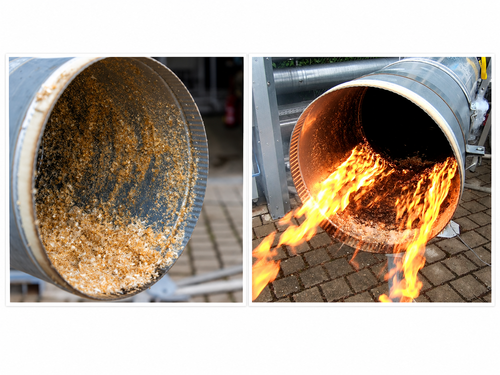
Two pipes, one of them on fire
From deposits to a source of fire: flammable deposits on the inside wall of a duct can ignite and keep burning unnoticed inside the duct.

Stop sparks. Fight pipe fires effectively.

Find the right fire protection solution with GreCon PROTECTOR PIPE. Talk to our experts about the fire risks in your process and the appropriate protective measures.